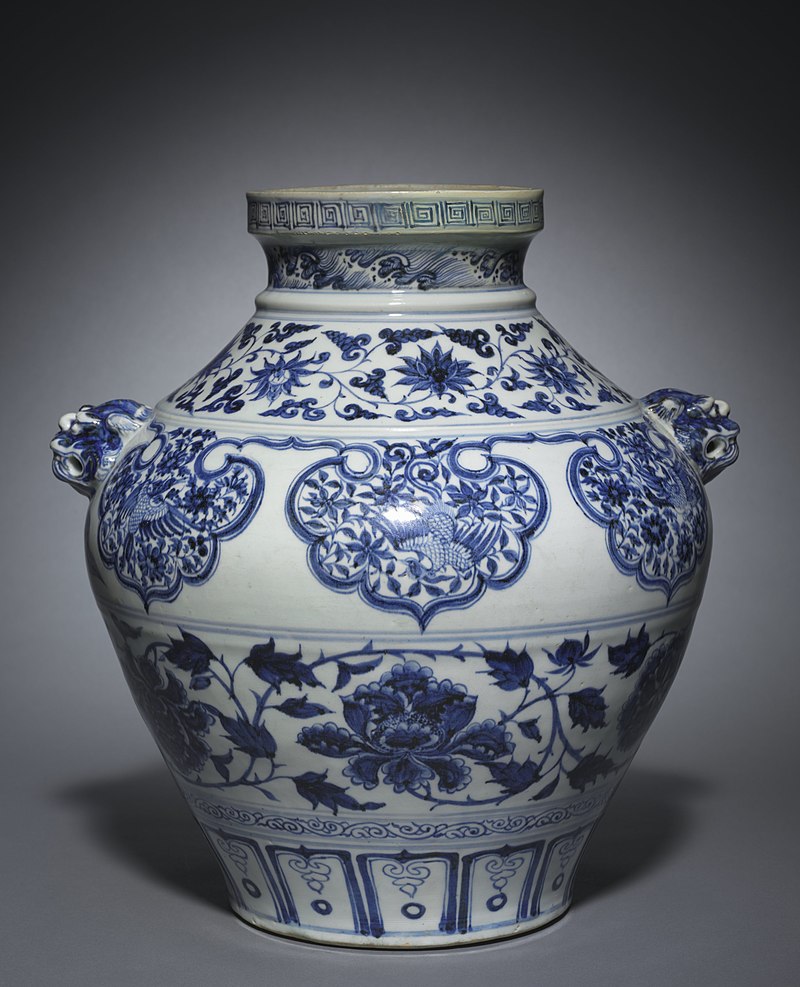
Blue and White Porcelain
Introduction
Blue and white porcelain is one of the most famous and recognizable styles of Chinese ceramics, known for its distinctive blue designs on a white background. This style of porcelain production began to flourish in Jingdezhen, often referred to as the "porcelain capital of China," during the Ming (1368-1644) and Qing (1644-1911) dynasties. The craftsmanship involved in producing blue and white porcelain has become emblematic of Chinese ceramic art, showcasing a mix of traditional techniques and creative expression.
Historical Background
The history of blue and white porcelain dates back to the Tang Dynasty (618-907), but it gained prominence during the Yuan Dynasty (1271-1368) with the introduction of cobalt blue pigments imported from Persia. However, it was during the Ming and Qing dynasties that blue and white porcelain became a significant cultural and artistic export, reaching markets in Asia and Europe. In particular, the Dutch East India Company exported millions of pieces, vastly influencing European ceramic design.
Production Centers
Jingdezhen, located in Jiangxi province, is synonymous with blue and white porcelain. Often called the "porcelain capital," Jingdezhen has been a major producer of ceramics since the Song Dynasty (960-1279). The city is known for its high-quality kaolin clay, which provides the fine, white base for porcelain. During the Ming and Qing dynasties, Jingdezhen was home to both imperial and private kilns, producing pieces for both domestic use and export.
Artistic and Cultural Significance
The artistic value of blue and white porcelain lies in its aesthetic appeal and the craftsmanship of its creators. Designs range from intricate floral and landscape motifs to depictions of myths and literature. The blue hue, achieved through cobalt oxide, is applied under the glaze, giving each piece its characteristic look. This style of decoration allows for a wide range of artistic expression, from traditional scenes to modern interpretations.
The cultural significance of blue and white porcelain extends beyond its beauty. It has been associated with the tastes and preferences of emperors, as well as the everyday lives of the scholars and literati, particularly during periods of social and political upheaval. Customized pieces, reflecting the owner's status and personality, were especially popular among scholar-officials.
Modern Influence and Legacy
Today, blue and white porcelain remains a symbol of Chinese cultural heritage and artistic achievement. It continues to inspire contemporary artists and designers, who reinterpret traditional patterns for modern contexts. Exhibitions around the world showcase historical and modern pieces, highlighting the continued fascination and appreciation for this art form.
In addition to its aesthetic and cultural value, blue and white porcelain has become an important subject of study for historians and archaeologists, who use it to understand trade patterns, technological exchanges, and cultural interactions between China and the rest of the world.








